Why Is My AC Not Cooling Properly? Causes and Solutions
Learn the most common reasons why your air conditioner is not cooling properly and discover effective troubleshooting tips to restore comfort in your home.
MendAI Team
Author
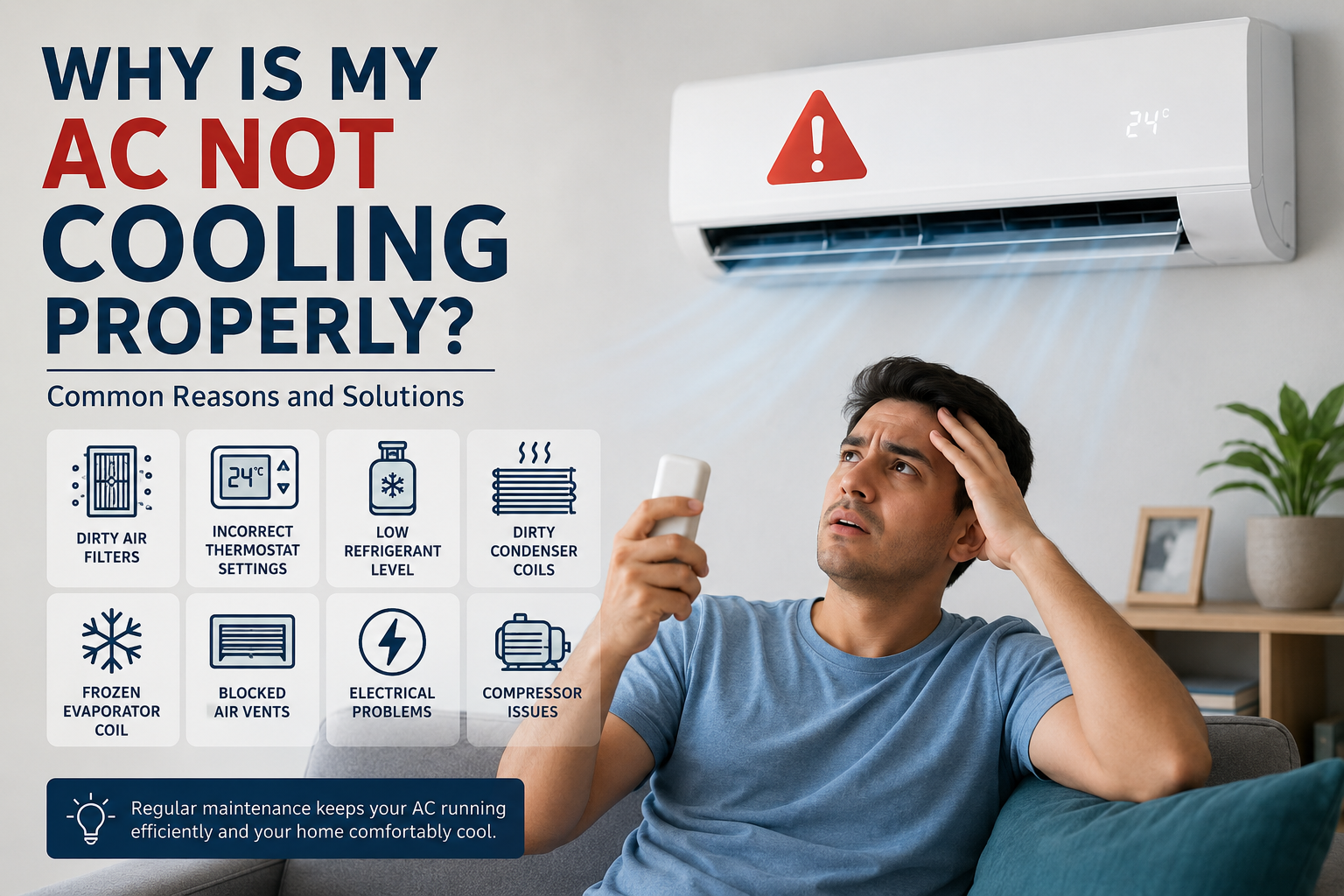
Why Is My AC Not Cooling Properly? Causes and Solutions
Few things are more frustrating than turning on your air conditioner during a hot day only to discover that it's not cooling effectively. Poor cooling can make your home uncomfortable, increase electricity bills, and put unnecessary strain on your AC system.
Understanding the common causes of AC cooling problems can help you identify issues early and determine whether a simple fix or professional repair is required.
Common Signs Your AC Is Not Cooling Properly
Before identifying the cause, look for these warning signs:
- Warm air blowing from vents
- Weak airflow
- Rooms taking longer to cool
- Uneven cooling throughout the house
- Increased electricity bills
- AC running continuously
- Ice buildup on indoor units
- Strange noises or odors
If you notice any of these symptoms, your air conditioner may need attention.
1. Dirty Air Filters
Dirty air filters are one of the leading causes of poor AC performance.
Over time, filters become clogged with dust, dirt, pet hair, and debris. This restricts airflow and prevents the system from cooling efficiently.
Symptoms
- Reduced airflow
- Poor cooling performance
- Higher energy consumption
- Dust accumulation indoors
Solution
- Turn off the AC.
- Remove the filters.
- Wash reusable filters with clean water.
- Allow them to dry completely.
- Reinstall and restart the unit.
Maintenance Tip
Clean air filters every 2–4 weeks during heavy usage.
2. Incorrect Thermostat Settings
Sometimes the problem isn't the AC itself but the thermostat settings.
Check These Settings
- Is the unit set to Cool mode?
- Is the temperature lower than room temperature?
- Are thermostat batteries working properly?
- Is the fan speed set correctly?
Recommended Settings
- Mode: Cool
- Temperature: 22°C–24°C
- Fan: Auto
Correct settings improve both cooling and energy efficiency.
3. Refrigerant Gas Leakage
Refrigerant is responsible for absorbing and transferring heat.
When refrigerant levels drop due to a leak, the AC loses its ability to cool effectively.
Symptoms
- Warm air from vents
- Ice on evaporator coils
- Hissing or bubbling sounds
- Continuous AC operation
Solution
A qualified technician should:
- Detect refrigerant leaks
- Repair damaged lines
- Recharge refrigerant to proper levels
Never attempt refrigerant handling yourself.
4. Dirty Condenser Coils
The outdoor condenser unit releases heat from your home.
Dust, leaves, and debris can block heat transfer, reducing cooling efficiency.
Symptoms
- AC runs longer than usual
- Increased power bills
- Poor cooling performance
Solution
- Turn off power to the unit.
- Remove leaves and debris.
- Clean visible dirt carefully.
- Maintain at least 2 feet of clearance around the unit.
Regular outdoor unit cleaning improves performance significantly.
5. Frozen Evaporator Coil
The evaporator coil absorbs heat from indoor air.
Restricted airflow or refrigerant problems can cause the coil to freeze.
Symptoms
- Ice formation on indoor unit
- Water leakage
- Weak airflow
- Poor cooling
Solution
- Turn off the AC.
- Allow the ice to melt completely.
- Clean filters and vents.
- Restart the unit.
If freezing returns, professional inspection is recommended.
6. Blocked or Closed Air Vents
Air vents distribute cool air throughout your home.
Blocked vents can restrict airflow and create uneven cooling.
Common Causes
- Furniture covering vents
- Curtains blocking airflow
- Dust buildup inside vents
Solution
- Inspect all vents.
- Remove obstructions.
- Clean vent covers regularly.
Proper airflow helps maintain consistent room temperatures.
7. Electrical Component Issues
Several electrical components control your AC system.
Faulty capacitors, wiring issues, or damaged circuit boards can reduce cooling performance.
Warning Signs
- AC won't start
- Frequent circuit breaker trips
- Burning smells
- Intermittent cooling
Solution
Electrical repairs should always be handled by trained professionals.
8. Compressor Problems
The compressor is the heart of your air conditioning system.
It circulates refrigerant between indoor and outdoor units.
Symptoms
- Warm air despite the system running
- Loud clicking or humming sounds
- Outdoor unit not functioning properly
Solution
Compressor repairs require professional diagnosis and service.
Ignoring compressor issues can lead to costly replacements.
9. Extreme Outdoor Temperatures
During very hot summer days, your AC may struggle to maintain extremely low indoor temperatures.
What to Expect
Most residential AC systems are designed to maintain indoor temperatures about 20°C cooler than outdoor temperatures.
Tips
- Keep curtains closed during peak sunlight.
- Reduce heat-generating appliance usage.
- Ensure doors and windows remain closed.
These measures help reduce cooling load.
When Should You Call an AC Technician?
Contact a professional if:
- Refrigerant leakage is suspected
- Ice repeatedly forms on coils
- Electrical issues occur
- The compressor is malfunctioning
- Cooling remains poor after basic troubleshooting
Professional servicing can prevent further damage and extend the lifespan of your AC.
Preventive Maintenance Tips
To keep your air conditioner cooling efficiently:
- Clean filters regularly
- Schedule annual servicing
- Keep outdoor units free from debris
- Monitor unusual noises
- Check thermostat settings periodically
- Inspect vents for obstructions
Routine maintenance can improve performance and reduce repair costs.
Final Thoughts
If your AC is not cooling properly, the cause may range from a simple dirty filter to more serious issues such as refrigerant leaks or compressor failure.
Regular maintenance, timely inspections, and prompt repairs can help keep your air conditioner operating at peak efficiency. While some basic troubleshooting can be performed at home, complex issues should always be handled by qualified HVAC professionals to ensure safety and long-term reliability.