Why Does My AC Smell Bad? Causes and Solutions
Unpleasant odors coming from your air conditioner can indicate mold, dirty filters, drainage issues, or electrical problems. Learn the common causes and how to eliminate bad AC smells effectively.
MendAI Team
Author
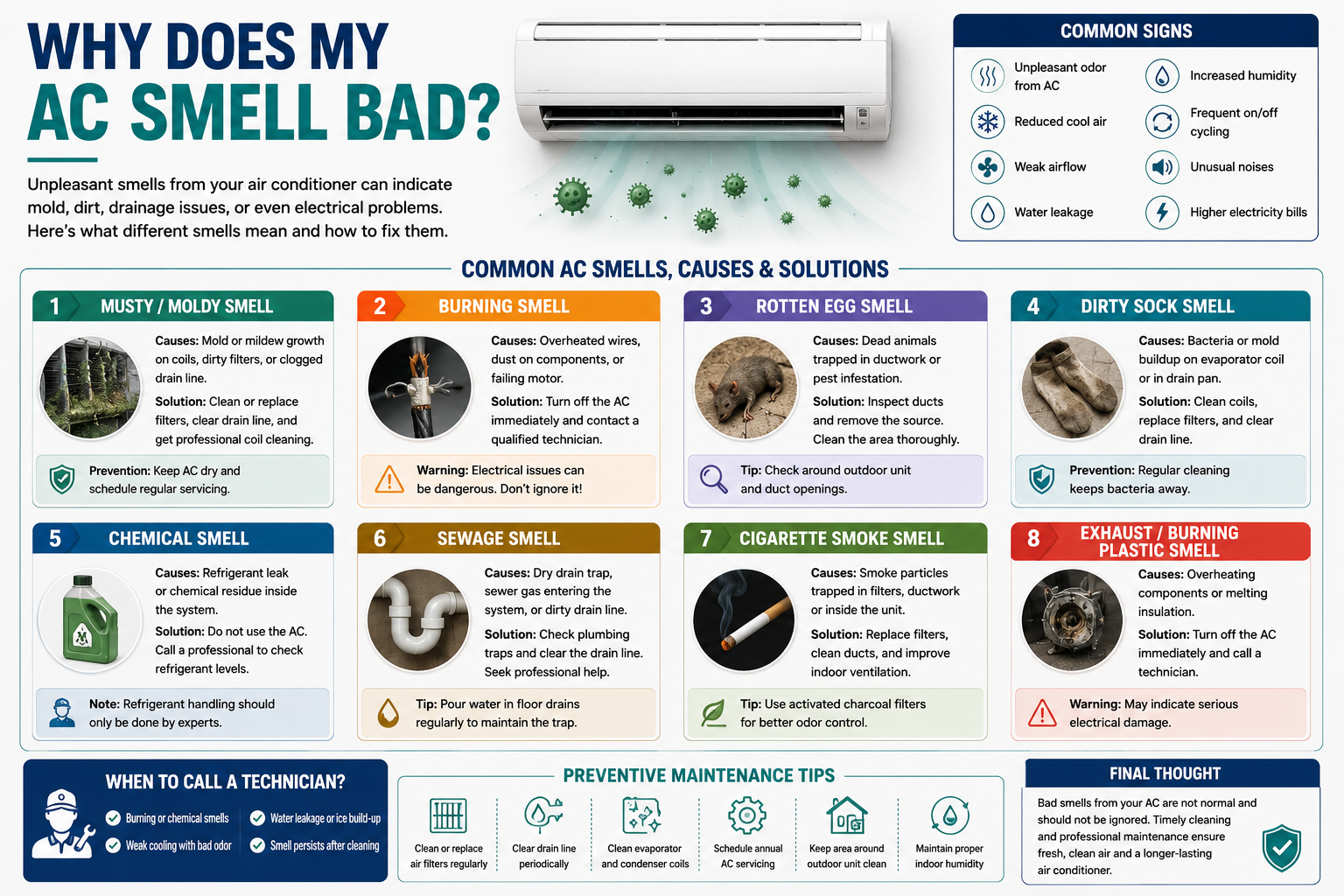
Why Does My AC Smell Bad? Causes and Solutions
Your air conditioner should provide cool, clean, and fresh air. If you notice unpleasant odors coming from your AC, it's often a sign that something isn't working properly.
Bad smells can affect indoor air quality, reduce comfort, and sometimes indicate issues that require immediate attention. Understanding the source of the odor can help you take the right action before the problem becomes more serious.
Common Signs Associated with AC Odors
Besides unpleasant smells, you may also notice:
- Reduced cooling performance
- Increased humidity indoors
- Water leakage
- Weak airflow
- Frequent AC cycling
- Unusual noises
- Higher electricity bills
If these symptoms occur alongside bad odors, your AC may need maintenance or repair.
1. Musty or Moldy Smell
A musty smell is one of the most common AC odor complaints.
This odor is usually caused by mold, mildew, or bacterial growth inside the unit.
Possible Causes
- Dirty air filters
- Moisture buildup inside the evaporator coil
- Clogged drain lines
- Excess humidity
Solution
- Clean or replace air filters.
- Check and clear clogged drain lines.
- Schedule professional coil cleaning.
- Keep indoor humidity under control.
Prevention Tip
Regular servicing helps prevent mold growth inside the system.
2. Burning Smell
A burning odor should never be ignored.
Possible Causes
- Overheated electrical components
- Damaged wiring
- Failing motor
- Dust burning off after long periods of inactivity
Symptoms
- Electrical smell
- AC shutting down unexpectedly
- Buzzing noises
Solution
- Turn off the AC immediately.
- Avoid operating the unit.
- Contact a qualified technician for inspection.
Electrical issues can pose serious safety risks.
3. Rotten Egg Smell
A sulfur-like or rotten egg smell can be alarming.
Possible Causes
- Dead animals trapped in ductwork
- Pest infestation near the AC system
Unlike gas furnaces, air conditioners do not naturally produce this odor.
Solution
Inspect accessible duct areas and contact a professional if the source cannot be located.
4. Dirty Sock Smell
A dirty sock odor is commonly associated with bacterial buildup.
Possible Causes
- Moisture on evaporator coils
- Bacteria and mold growth
- Dirty filters
Symptoms
- Odor strongest when AC starts
- Reduced indoor air freshness
Solution
Professional coil cleaning and filter maintenance typically resolve the issue.
5. Chemical Smell
A chemical odor may indicate refrigerant-related problems.
Possible Causes
- Refrigerant leakage
- Cleaning chemical residue
- Damaged system components
Symptoms
- Poor cooling performance
- Hissing sounds
- Increased energy usage
Solution
If refrigerant leakage is suspected, contact an HVAC technician immediately.
Refrigerant handling should only be performed by certified professionals.
6. Sewage Smell
A sewage-like odor may originate from plumbing systems rather than the AC itself.
Possible Causes
- Dry plumbing traps
- Sewer gas entering ducts
- Drain line contamination
Solution
Inspect nearby plumbing fixtures and drains.
If the odor persists, professional evaluation may be necessary.
7. Cigarette Smoke Smell
Air conditioning systems can absorb odors over time.
Possible Causes
- Indoor smoking
- Smoke residue in filters
- Contaminated ductwork
Solution
- Replace air filters.
- Clean ducts if necessary.
- Improve indoor ventilation.
Persistent smoke odors may require deep cleaning.
8. Exhaust or Burning Plastic Smell
Strong exhaust-like odors often indicate overheating components.
Possible Causes
- Failing fan motor
- Overheated wiring
- Melting insulation
Warning Signs
- Burning smell becomes stronger over time
- AC performance decreases
- Electrical issues occur
Solution
Turn off the unit immediately and seek professional assistance.
When Should You Call an AC Technician?
Contact a professional if:
- Burning smells are present
- Mold odors persist after cleaning filters
- Refrigerant leakage is suspected
- Electrical issues accompany odors
- Strong chemical smells continue
- Cooling performance declines significantly
Prompt action can prevent costly repairs and improve indoor air quality.
Preventive Maintenance Tips
To keep your AC smelling fresh:
- Clean air filters regularly
- Schedule annual AC servicing
- Keep drain lines clear
- Control indoor humidity
- Inspect for water leakage
- Address unusual odors early
Routine maintenance is the best way to prevent odor-related issues.
Final Thoughts
Bad smells coming from your air conditioner often indicate problems such as mold growth, clogged drains, dirty filters, refrigerant leaks, or electrical issues. While some odors can be resolved through simple maintenance, others require professional diagnosis and repair.
By addressing unpleasant smells early and maintaining your AC regularly, you can improve indoor air quality, enhance cooling performance, and extend the lifespan of your air conditioning system.