Washing Machine Not Draining? Causes and Easy Fixes
Is your washing machine not draining water? Discover the common causes, safe DIY troubleshooting steps, and signs that you need a professional washing machine technician.
MendAI Team
Author
Washing Machine Not Draining? Causes and Easy Fixes
A washing machine that does not drain can leave your clothes soaking in dirty water and interrupt the entire wash cycle. This is a common washing machine problem and does not always mean that the appliance requires an expensive repair.
The issue may be caused by a blocked drain hose, clogged filter, incorrect wash setting, or an overloaded drum. However, problems with the drain pump or electrical components may require professional attention.
This guide explains the most common reasons why a washing machine does not drain and the safe troubleshooting steps you can try at home.
Why Is My Washing Machine Not Draining?
Your washing machine removes water using a drain pump, filter and outlet hose. If any part of this drainage system becomes blocked or damaged, water may remain inside the drum.
Common causes include:
- A blocked drain hose
- A clogged pump filter
- A bent or twisted outlet pipe
- An unbalanced or overloaded drum
- An incomplete wash cycle
- A faulty drain pump
- A damaged lid or door switch
- An electrical or control-board problem
Start with the simplest checks before assuming that a major component has failed.
1. Check the Selected Wash Cycle
Some washing machine settings do not drain the water immediately. Options such as rinse hold, delicate wash or soak mode may leave water inside the drum until another cycle is selected.
Check the control panel and confirm that the machine is not paused or operating in rinse-hold mode.
Try selecting:
- Drain
- Spin
- Drain and spin
If the washing machine drains normally, the issue may have been caused by the selected wash setting rather than a mechanical fault.
2. Restart the Washing Machine
A temporary electronic error can prevent the machine from completing its drainage cycle.
To restart it safely:
- Switch off the washing machine.
- Unplug it from the power socket.
- Wait approximately five minutes.
- Reconnect the power.
- Select the drain or spin cycle.
A restart may reset a minor control-panel or sensor error.
3. Inspect the Drain Hose
The drain hose carries wastewater from the washing machine to the household drain.
Water may remain inside the drum if the hose is:
- Bent or twisted
- Crushed behind the machine
- Blocked by lint or debris
- Installed too high or too deep
- Disconnected from the drain outlet
Switch off the appliance before inspecting the hose. Straighten any visible bends and make sure the machine is not pressing against it.
Do not force sharp objects into the hose because this can puncture or damage it.
4. Clean the Drain Pump Filter
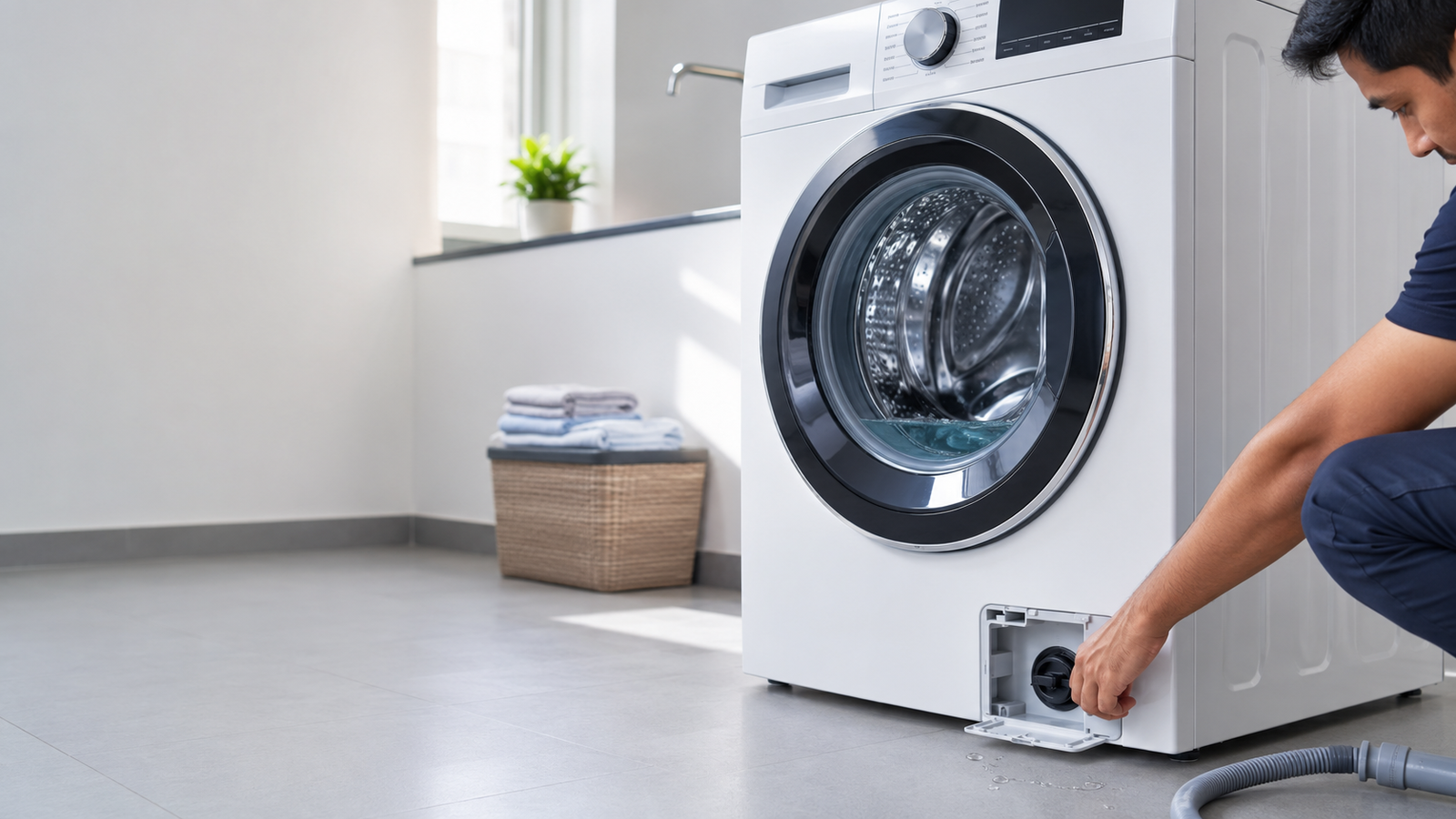
Many front-load washing machines have a drain pump filter near the bottom of the appliance. This filter can collect lint, coins, buttons, hair and other small objects.
A clogged filter can slow down drainage or stop it completely.
Before opening the filter:
- Switch off and unplug the washing machine.
- Place towels and a shallow container near the filter.
- Use the emergency drain tube if your machine has one.
- Slowly open the filter because trapped water may flow out.
- Remove visible lint and debris.
- Reinstall the filter securely.
Check the manufacturer’s instructions before removing any component.
5. Check for an Unbalanced Load
Heavy or unevenly distributed clothes can prevent the washing machine from entering the spin and drain cycle.
This frequently happens when washing:
- Blankets
- Bedsheets
- Towels
- Heavy jackets
- A single bulky item
Pause the machine, distribute the clothes evenly and remove some items if the drum is overloaded. Then run the drain-and-spin cycle again.
6. Make Sure the Door Is Properly Closed
Front-load washing machines may not drain or spin if the door-lock system does not detect that the door is securely closed.
Top-load machines may have a similar safety mechanism connected to the lid.
Check for:
- Clothes trapped around the door
- Dirt around the locking area
- A loose or damaged latch
- A door-lock warning on the display
Do not force the door open when water is still inside the drum.
7. Examine the Household Drain
The washing machine may be working correctly while the household drainage pipe is blocked.
Possible signs include:
- Water backing up from the outlet
- Slow drainage from nearby sinks
- Unpleasant smells
- Water overflowing when the machine drains
If the household drain is blocked, it may need to be cleaned separately from the washing machine.
8. Listen for the Drain Pump
When the drain cycle begins, you should normally hear the drain pump operating.
Different sounds may indicate different problems:
- Humming without drainage may indicate a blockage.
- Grinding may indicate debris inside the pump.
- Complete silence may indicate an electrical or pump failure.
- Loud rattling may indicate a foreign object.
Stop using the appliance if you hear grinding, burning or unusually loud noises.
9. Check for an Error Code
Modern washing machines often display an error code when they detect a drainage problem.
Depending on the brand, the code may indicate:
- Slow drainage
- Pump blockage
- Drain hose problem
- Door-lock failure
- Water-level sensor issue
Search for the exact error code in your appliance manual or use MendAI’s AI-powered diagnostic assistance to understand the likely cause.
10. Avoid Repeatedly Running the Machine
Repeatedly restarting a washing machine that cannot drain may place additional stress on the pump and electrical system.
Stop using the machine if:
- Water remains after multiple drain cycles
- You smell burning
- The machine is leaking
- The circuit breaker trips
- The pump makes grinding noises
Disconnect the appliance and arrange an inspection.
How to Remove Standing Water Safely
If water remains inside the drum, avoid immediately opening the washing machine door.
For a front-load washing machine:
- Switch off and unplug the appliance.
- Place towels around the machine.
- Locate the emergency drain tube or pump filter.
- Drain the water slowly into a shallow container.
- Empty the container repeatedly if necessary.
For a top-load washing machine, the water may need to be removed carefully using a small container if the drain function is not working.
Do not tilt an appliance filled with water because it can cause leakage or electrical damage.
When Should You Call a Technician?
Professional washing machine repair may be necessary if:
- The drain pump is not operating
- Water returns after draining
- The machine displays repeated error codes
- The door remains locked
- The appliance leaks during drainage
- The drain hose and filter are clear
- The machine stops before the spin cycle
- There is a burning smell or electrical issue
A qualified technician can inspect the pump, wiring, sensors, door lock and control board.
How to Prevent Washing Machine Drainage Problems
Regular care can reduce the risk of future drainage issues.
Follow these simple practices:
- Check clothing pockets before washing.
- Avoid overloading the drum.
- Clean the pump filter regularly.
- Use the correct amount of detergent.
- Keep the drain hose straight.
- Remove lint, coins and small objects.
- Run a maintenance cleaning cycle periodically.
- Arrange servicing if unusual noises develop.
Too much detergent can create excessive foam and interfere with proper rinsing and drainage.
Get Washing Machine Repair Assistance from MendAI
MendAI helps you understand appliance problems through AI-powered diagnosis and practical DIY repair guidance.
If the issue requires professional attention, you can also book doorstep washing machine repair service in Mumbai, Navi Mumbai, Thane and other supported locations.
Our appliance repair assistance covers common problems such as:
- Washing machine not draining
- Washing machine not spinning
- Water leakage
- Machine not starting
- Excessive vibration or noise
- Door-lock problems
- Inlet and outlet issues
Final Thoughts
A washing machine that does not drain is often caused by a clogged filter, blocked outlet hose, incorrect setting or unbalanced load. These basic problems may be resolved safely at home.
However, if the machine still contains water after checking the filter, hose and wash settings, the drain pump or another internal component may need professional inspection.
Avoid dismantling electrical components yourself. Use MendAI to identify the likely problem and arrange doorstep appliance repair when expert assistance is required.