How to Improve AC Cooling During Summer
Struggling with poor AC cooling during hot summer days? Learn practical tips to improve air conditioner performance, increase energy efficiency, and keep your home comfortable throughout the season.
MendAI Team
Author
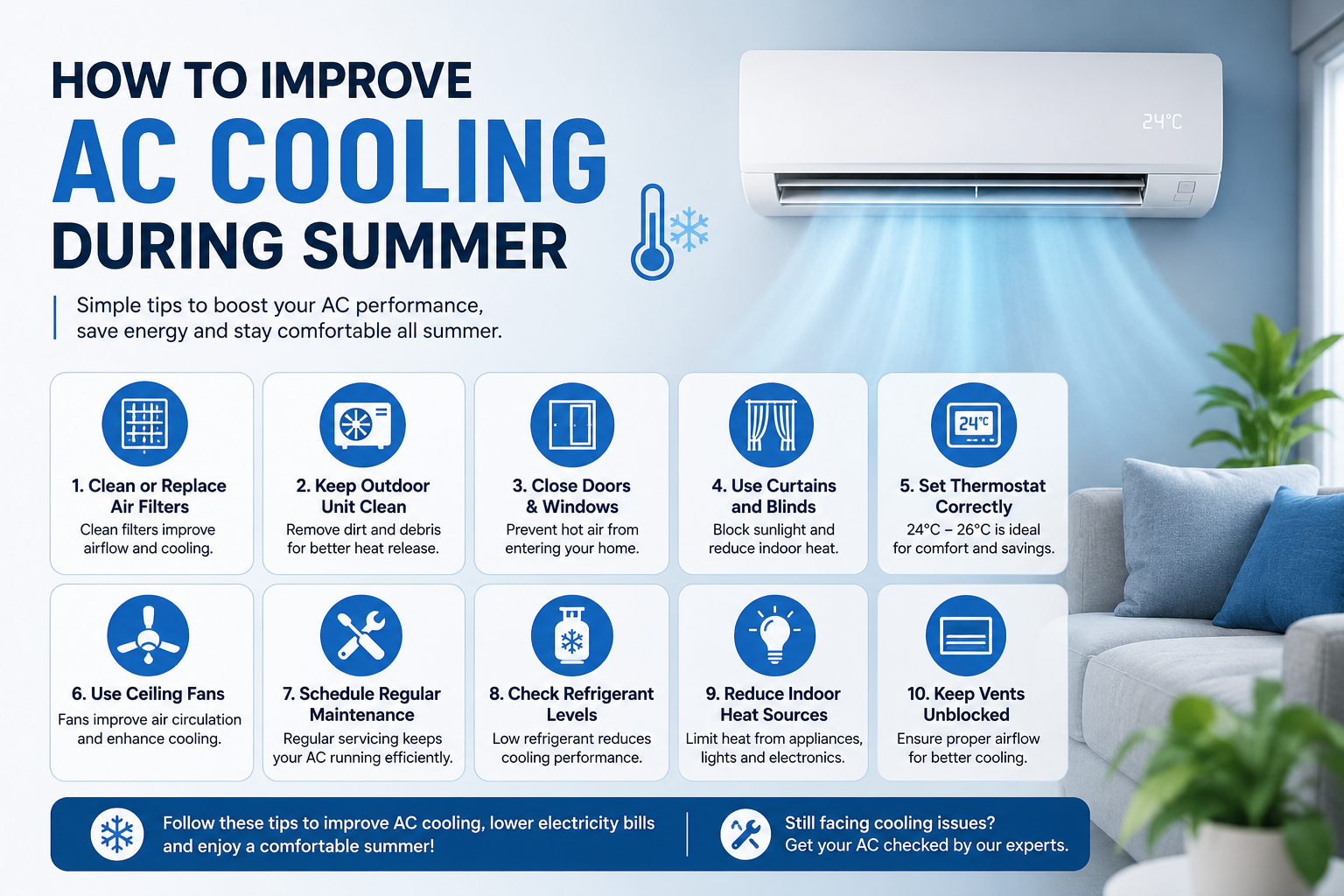
How to Improve AC Cooling During Summer
During peak summer, air conditioners work harder than usual to maintain comfortable indoor temperatures. However, many homeowners notice that their AC doesn't cool as effectively as expected, even when running continuously.
The good news is that poor cooling doesn't always mean your air conditioner needs major repairs. In many cases, a few simple maintenance steps and usage habits can significantly improve cooling performance.
Let's explore some practical ways to help your AC cool more efficiently during the hottest months of the year.
Why AC Cooling Performance Drops in Summer
As outdoor temperatures rise, your air conditioner must remove more heat from your home.
Several factors can reduce cooling efficiency, including:
- Dirty air filters
- Blocked airflow
- Dirty coils
- Low refrigerant levels
- Poor room insulation
- Excessive heat entering the home
Addressing these issues can help your AC operate more effectively and reduce strain on the system.
1. Clean or Replace Air Filters
One of the easiest ways to improve AC cooling is by cleaning or replacing dirty air filters.
When filters become clogged with dust and debris, airflow is restricted, making it harder for the system to circulate cool air.
Benefits of clean filters:
- Better airflow
- Faster cooling
- Improved indoor air quality
- Lower energy consumption
Most filters should be cleaned or replaced every 1 to 3 months depending on usage.
2. Keep the Outdoor Unit Clean
Your outdoor condenser unit releases heat collected from inside your home.
If the unit is surrounded by dirt, leaves, or other debris, heat transfer becomes less efficient.
To maintain proper performance:
- Remove leaves and debris around the unit
- Keep at least 2 feet of clear space around it
- Gently clean visible dirt from the fins
A clean condenser helps your AC cool more efficiently during extreme heat.
3. Close Doors and Windows
Open windows and doors allow hot outdoor air to enter your home, forcing your AC to work harder.
To maximize cooling:
- Keep windows closed during the hottest part of the day
- Ensure doors remain shut in air-conditioned rooms
- Seal any noticeable gaps around windows
Reducing heat infiltration helps maintain a stable indoor temperature.
4. Use Curtains and Blinds
Direct sunlight can significantly increase indoor temperatures.
Blocking sunlight during the day reduces heat gain and eases the load on your air conditioner.
Consider:
- Closing curtains during afternoon hours
- Using blackout curtains in sunny rooms
- Installing reflective window films if necessary
This simple step can make a noticeable difference in cooling performance.
5. Set the Thermostat Correctly
Many people lower the thermostat to extremely low temperatures expecting faster cooling.
However, setting the thermostat too low does not cool a room faster.
For optimal comfort and efficiency:
- Set the temperature between 24°C and 26°C
- Use programmable settings when possible
- Avoid frequent temperature adjustments
Consistent settings help your system operate efficiently.
6. Use Ceiling Fans Alongside Your AC
Ceiling fans help distribute cool air more evenly throughout the room.
When used together with an air conditioner, fans create a wind-chill effect that makes rooms feel cooler without lowering the thermostat.
Benefits include:
- Better air circulation
- More consistent room temperatures
- Reduced energy usage
Fans can help improve comfort while lowering electricity costs.
7. Schedule Regular AC Maintenance
Professional servicing helps identify hidden problems that affect cooling performance.
Routine maintenance typically includes:
- Cleaning filters and coils
- Checking refrigerant levels
- Inspecting electrical components
- Clearing drain lines
- Testing overall system efficiency
Regular servicing helps maintain reliable cooling throughout summer.
8. Check for Refrigerant Issues
Low refrigerant levels can significantly reduce cooling efficiency.
Signs of refrigerant problems include:
- Weak cooling
- Ice formation on coils
- Longer cooling cycles
- Higher electricity bills
If you suspect a refrigerant leak, contact a qualified technician for inspection and repairs.
9. Reduce Indoor Heat Sources
Many household appliances generate heat that can increase room temperatures.
Try to:
- Limit oven usage during peak afternoon hours
- Turn off unused electronics
- Use energy-efficient lighting
Reducing indoor heat helps your AC maintain comfortable temperatures more easily.
10. Ensure Vents Are Not Blocked
Blocked supply vents restrict airflow and reduce cooling effectiveness.
Check that vents are not covered by:
- Furniture
- Curtains
- Storage boxes
- Decorative items
Proper airflow allows cool air to reach every part of the room.
When Should You Call a Professional?
If your AC still struggles to cool after following these tips, professional assistance may be necessary.
Common signs include:
- Warm air from vents
- Unusual noises
- Water leakage
- Frequent cycling
- Ice buildup on coils
- Sudden increase in electricity bills
A technician can diagnose the issue and recommend the appropriate solution.
Final Thoughts
Keeping your home cool during summer doesn't always require expensive repairs. Simple steps like cleaning air filters, maintaining the outdoor unit, blocking sunlight, and scheduling regular servicing can dramatically improve AC performance.
By following these tips, you can enjoy better cooling, lower energy bills, and a more comfortable home throughout the summer season while extending the lifespan of your air conditioner.