AC Water Leakage: Causes and Easy Fixes
Discover the most common causes of air conditioner water leakage and learn simple troubleshooting steps to prevent water damage and keep your AC running efficiently.
MendAI Team
Author
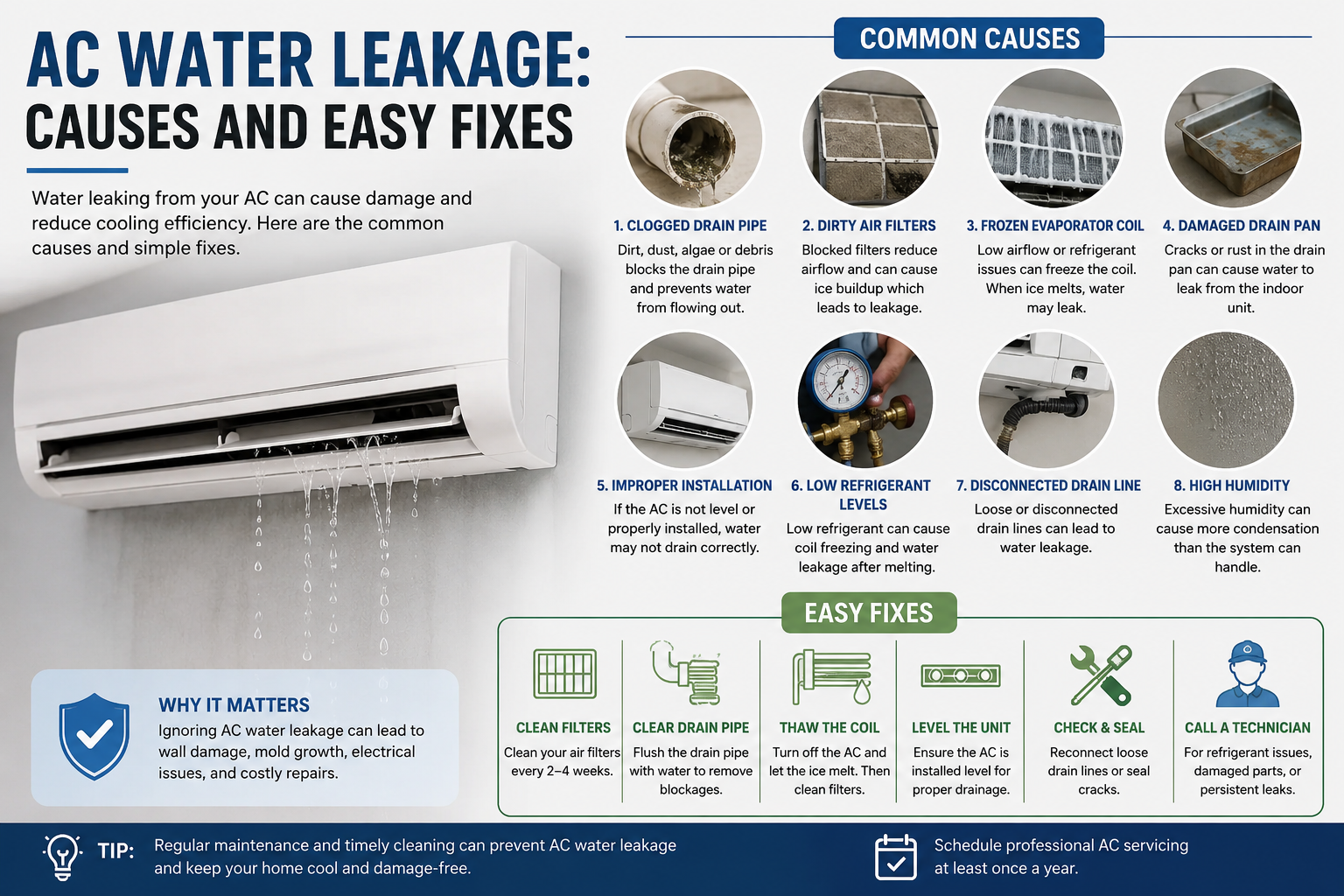
AC Water Leakage: Causes and Easy Fixes
Finding water dripping from your air conditioner can be alarming. While some condensation is normal during operation, visible water leakage often indicates an underlying problem that requires attention.
Ignoring AC water leakage can lead to water damage, mold growth, reduced cooling performance, and costly repairs. Understanding the common causes can help you identify the issue early and take appropriate action.
Common Signs of AC Water Leakage
Before diagnosing the problem, look for these warning signs:
- Water dripping from the indoor unit
- Water stains on walls or ceilings
- Puddles forming beneath the AC
- Musty odors around the unit
- Reduced cooling performance
- Excessive humidity indoors
- Gurgling or unusual sounds
If you notice any of these symptoms, your AC may require maintenance or repair.
1. Clogged Drain Pipe
A blocked condensate drain pipe is one of the most common causes of AC water leakage.
Over time, dust, dirt, algae, and debris can accumulate inside the drain line, preventing water from flowing out properly.
Symptoms
- Water dripping from the indoor unit
- Water pooling around the AC
- Musty smell near the unit
Solution
- Turn off the AC.
- Locate the drain pipe.
- Remove visible debris.
- Flush the pipe with clean water.
- Restart the AC and monitor drainage.
Maintenance Tip
Clean the drain pipe every few months to prevent blockages.
2. Dirty Air Filters
When air filters become clogged, airflow is restricted.
This can cause the evaporator coil to become too cold and freeze. Once the ice melts, excess water may overflow the drain pan.
Symptoms
- Weak airflow
- Water leakage
- Ice buildup on the indoor unit
- Reduced cooling efficiency
Solution
- Remove the air filters.
- Wash reusable filters with water.
- Allow them to dry completely.
- Reinstall and restart the system.
Maintenance Tip
Clean filters every 2–4 weeks during peak usage seasons.
3. Frozen Evaporator Coil
The evaporator coil absorbs heat from indoor air.
Low airflow or refrigerant issues can cause the coil to freeze. When the ice eventually melts, excess water can leak from the unit.
Symptoms
- Ice on indoor coils
- Water dripping after AC shutdown
- Poor cooling performance
Solution
- Turn off the AC.
- Allow the ice to melt naturally.
- Check and clean filters.
- Ensure vents are open and unobstructed.
If the problem continues, professional inspection is recommended.
4. Damaged or Cracked Drain Pan
The drain pan collects condensation before it exits through the drain pipe.
Over time, older drain pans can rust, crack, or develop holes that allow water to escape.
Symptoms
- Water leaking directly beneath the indoor unit
- Visible rust or corrosion
- Persistent dripping
Solution
Inspect the drain pan for damage.
Small cracks may be sealed temporarily, but severely damaged pans should be replaced.
5. Improper AC Installation
Incorrect installation can prevent proper drainage.
If the indoor unit is not level, water may collect in the wrong areas and overflow.
Symptoms
- Leakage soon after installation
- Water dripping from one side of the unit
- Uneven drainage
Solution
A technician should inspect the installation and adjust the unit to ensure proper alignment.
6. Low Refrigerant Levels
Low refrigerant levels can cause pressure changes inside the system.
This often leads to frozen evaporator coils, which eventually create water leakage when the ice melts.
Symptoms
- Water leakage
- Warm air from vents
- Ice formation on coils
- Hissing sounds
Solution
A qualified technician should:
- Locate refrigerant leaks
- Repair damaged lines
- Recharge refrigerant to the correct level
Refrigerant handling should always be performed by professionals.
7. Disconnected Drain Line
In some cases, the condensate drain line may become loose or disconnected.
When this happens, water bypasses the drainage system and leaks directly into your home.
Symptoms
- Sudden water leakage
- Water near pipe connections
- AC otherwise functioning normally
Solution
Inspect visible drain connections and reconnect loose fittings if accessible.
For hidden or difficult-to-reach lines, contact an AC technician.
8. Excessive Humidity
During periods of high humidity, your AC removes more moisture from the air than usual.
This can overwhelm drainage systems that are already partially blocked or poorly maintained.
Symptoms
- Increased condensation
- Occasional dripping during humid weather
- Moisture around the indoor unit
Solution
- Keep filters clean.
- Ensure drain lines are clear.
- Use a dehumidifier if necessary.
Proper maintenance helps manage excess moisture effectively.
When Should You Call an AC Technician?
Contact a professional if:
- Water leakage continues after cleaning filters
- The drain pipe remains blocked
- Refrigerant leakage is suspected
- Ice repeatedly forms on coils
- The drain pan is damaged
- Installation issues are present
Professional diagnosis can prevent water damage and expensive repairs.
Preventive Maintenance Tips
To reduce the risk of AC water leakage:
- Clean air filters regularly
- Inspect drain pipes periodically
- Schedule annual AC servicing
- Keep vents unobstructed
- Check for unusual noises or odors
- Monitor water drainage during operation
Routine maintenance can significantly extend the lifespan of your air conditioner.
Final Thoughts
AC water leakage is often caused by clogged drain pipes, dirty filters, frozen coils, damaged drain pans, or refrigerant-related issues. While some problems can be resolved through basic maintenance, persistent leakage should never be ignored.
Regular cleaning, timely servicing, and early repairs can help prevent water damage, improve cooling efficiency, and keep your air conditioner operating reliably throughout the year.