AC Making Unusual Noise? Here's What It Means
Hearing strange sounds from your air conditioner? Learn what different AC noises mean, their possible causes, and when it's time to call a professional technician.
MendAI Team
Author
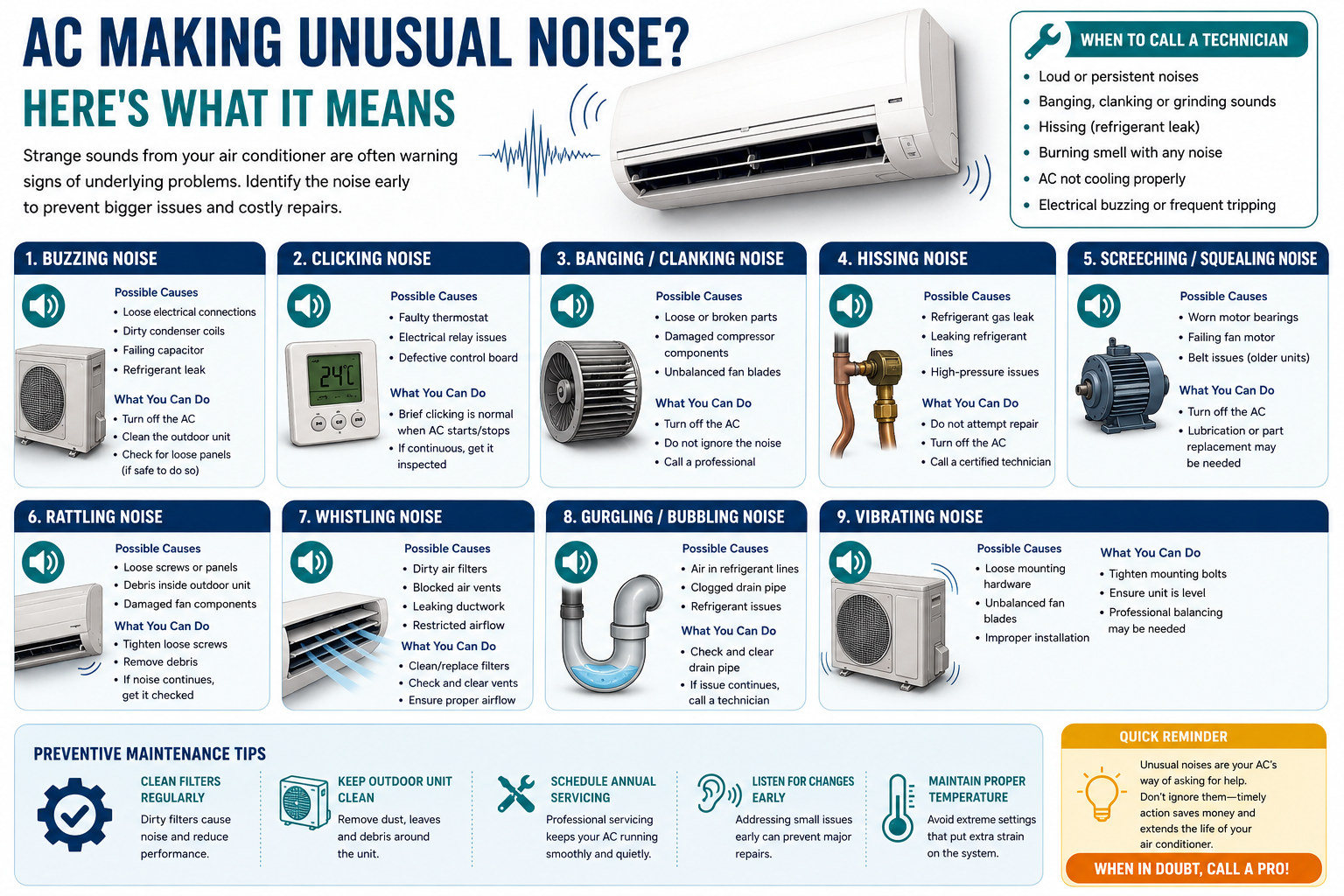
AC Making Unusual Noise? Here's What It Means
Air conditioners are designed to operate quietly. While some level of sound is normal during startup and operation, unusual noises often indicate that something is wrong within the system.
Ignoring strange AC noises can lead to reduced performance, higher energy bills, and expensive repairs. Identifying the type of noise can help you understand the problem and determine whether a simple fix or professional service is required.
Common Signs Your AC Needs Attention
Besides unusual noises, you may also notice:
- Reduced cooling performance
- Weak airflow
- Increased electricity bills
- Water leakage
- Frequent cycling on and off
- Burning smells
- Vibrations from the unit
If these symptoms accompany strange sounds, your AC may require immediate inspection.
1. Buzzing Noise
A buzzing sound is one of the most common AC noises.
Possible Causes
- Loose electrical connections
- Dirty condenser coils
- Failing capacitor
- Loose parts inside the unit
- Refrigerant leaks
What You Can Do
- Turn off the AC.
- Check for visible loose panels.
- Clean the outdoor unit if dirty.
If the buzzing continues, contact a technician to inspect electrical components safely.
2. Clicking Noise
A brief clicking sound during startup or shutdown is usually normal.
However, continuous clicking may indicate a problem.
Possible Causes
- Faulty thermostat
- Electrical relay issues
- Defective control board
- Failing compressor components
Solution
If the clicking persists while the AC is running, professional diagnosis is recommended.
3. Banging or Clanking Noise
Banging sounds often indicate loose or broken components inside the system.
Possible Causes
- Loose blower fan
- Damaged compressor parts
- Broken motor mounts
- Unbalanced fan blades
Warning
Continuing to operate the AC can cause further internal damage.
Solution
Turn off the unit immediately and arrange professional inspection.
4. Hissing Noise
A hissing sound should never be ignored.
Possible Causes
- Refrigerant gas leakage
- Leaking refrigerant lines
- High-pressure valve issues
Symptoms
- Poor cooling
- Ice buildup on coils
- Increased running time
Solution
Refrigerant systems should only be repaired by qualified technicians.
5. Screeching or Squealing Noise
High-pitched screeching sounds often indicate motor-related issues.
Possible Causes
- Worn motor bearings
- Failing fan motor
- Belt issues (in older systems)
Symptoms
- Loud startup noises
- Reduced airflow
- Intermittent operation
Solution
Motor components should be inspected and replaced if necessary.
6. Rattling Noise
Rattling sounds are often caused by loose objects or hardware.
Possible Causes
- Loose screws or panels
- Debris inside the outdoor unit
- Damaged fan components
Solution
- Turn off the AC.
- Inspect visible panels.
- Remove leaves, sticks, or debris.
- Tighten accessible screws.
If rattling continues, schedule professional servicing.
7. Whistling Noise
A whistling sound usually indicates airflow restrictions.
Possible Causes
- Dirty air filters
- Blocked air vents
- Leaking ductwork
- Restricted airflow
Solution
- Clean or replace air filters.
- Ensure vents remain open.
- Check for obstructions around air returns.
Improving airflow often resolves whistling issues.
8. Gurgling or Bubbling Noise
These sounds are commonly associated with drainage or refrigerant problems.
Possible Causes
- Air trapped in refrigerant lines
- Condensate drain blockage
- Refrigerant leaks
Symptoms
- Water leakage
- Reduced cooling
- Moisture around the unit
Solution
A technician should inspect both the drainage system and refrigerant circuit.
9. Vibrating Noise
Excessive vibration can indicate installation or component issues.
Possible Causes
- Loose mounting hardware
- Unbalanced fan blades
- Improper installation
- Compressor issues
Solution
Inspect visible mounting points and tighten loose fasteners where possible.
Persistent vibration should be professionally evaluated.
When Should You Call an AC Technician?
Contact a professional immediately if you notice:
- Banging or clanking noises
- Continuous clicking sounds
- Hissing from refrigerant lines
- Electrical buzzing
- Burning smells
- Compressor-related noises
Prompt repairs can prevent more serious damage and expensive replacements.
Preventive Maintenance Tips
To keep your AC operating quietly and efficiently:
- Clean air filters regularly
- Schedule annual maintenance
- Keep the outdoor unit free from debris
- Tighten loose screws and panels
- Monitor unusual sounds early
- Address small issues before they become major repairs
Routine maintenance can significantly extend the lifespan of your air conditioner.
Final Thoughts
Unusual AC noises are often early warning signs of underlying problems. Whether it's buzzing, rattling, hissing, screeching, or banging, identifying the sound can help diagnose the issue before it worsens.
While some noises may result from simple maintenance concerns, others can indicate serious electrical, refrigerant, or mechanical failures. If strange sounds persist, professional inspection is the safest way to protect your air conditioner and maintain reliable cooling performance.